Monday, May 4, 2015

Real Women of Fishing: Sara Dodd

Not just another pretty face among women featured in outdoor magazines, Sara Dodd has an authentic passion for hunting and fishing, which begs the question: What is the proper term for a woman that's an experienced, successful and true outdoorsman?
No bad days for Sara Dodd
Sara with a blacktail taken this past fall
Photo by Marty Theurer
If you've paid attention to this publication recently, you've noticed there's been a lot of energy put into highlighting women with an authentic love for the Outdoors. While many outdoor magazines feature advertisements of scantily clad women in heels promoting guns and gear, there are women outside that spotlight who are opening camo compacs and putting on seafoam green waders, proving that they can be as capable as any man, without handing in their "woman card."

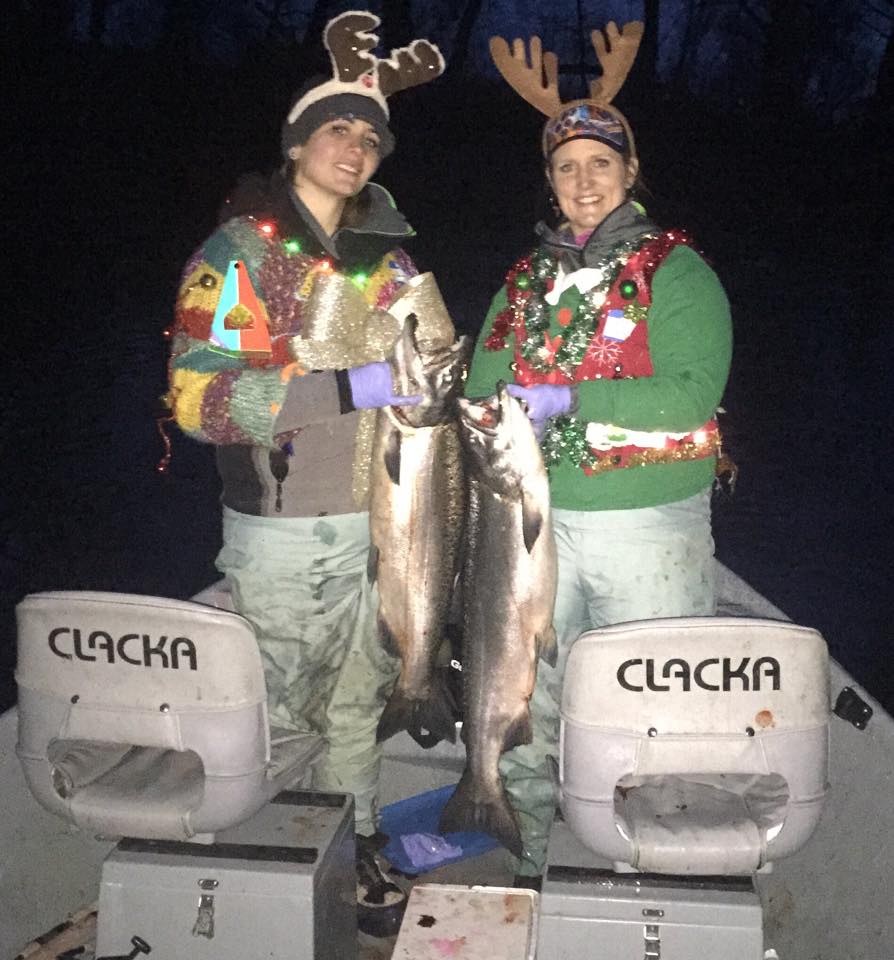
Sara Dodd not only fits the mold for the "Real Women of Fishing" feature as a legitimate angler, she sets a standard. A native of southern Oregon, she grew up fishing the Rogue, but these days you'll be more likely to find her fishing Tillamook waters. If you've seen her out with her fishing buddy Kristin Bishop, they're probably decked out in goofy costumes fishing out of guide David Johnson's boat.
I was fortunate enough to have her and her father Larry introduce me to the Wilson River earlier this March. With the water barely at a trickle, she launched a Northwest Boats drifter and rowed us two hefty men through some very skinny water. As we approached the first the first pinch point, she made it politely clear to her father that he needed to sit down, and that I needed to shift my weight to the right. Larry answered, "Yes dear," and took a seat while I followed the captain's orders. She then proceeded to tell me how she borrowed the boat from a fellow CCA member, Marty Theurer, who rescued it from sitting in an old farmer's barn. I got a history lesson behind Northwest Boats being bought out by Clackacraft twenty years ago while she rowed us downstream, avoiding her fair share of obstacles with ease.

Sara Dodd & Kristin Bishop modeling their outdoor look.
Ugly sweaters and Fall Chinook.
While she exhibited confidence on the oars, we didn't have high expectations for the day. We were one of only three boats on the entire stretch, one of which was a well-known local guide "Big Dave," owner of the Wilson River Lodge. The water was so low and clear that the chances of us hooking anything in the few puddles we could drift over seemed bleak. I was floating 8mm beads, trying to present something subtle to spooky fish. Sara was chucking a bead nearly twice the size of mine. Her father landed a trophy sized cutthroat on a spoon, but most of the holes seemed to be holding nothing more than a few very late fall salmon swimming around. We stopped the boat to get out and fish a hole on the opposite side of an island we drifted past. Just as I made sense of her presentation and switched to something closer to a chinook egg sized bead, she hooked up on a nice, coastal chrome hatchery buck. While I was scurrying around holding a net, she brought the fish into slackwater to beach it. Just about the time she had it's head flopping in the gravel, I went to reach for it's tail and tripped on the basket of the net. The fish freaked out, broke the line and I stumbled clumsily up the bank trying to swat at it in one last futile attempt to get between her trophy shot in a magazine and that fish's freedom. I could make up a story about how it was a wild fish and we were being good river stewards caring more about the fish than getting pictures, but I've told that fib so many times nobody believes it anymore.

Ryan Beck exhibiting proper netting techniques on a steelhead Sara hooked this earlier winter.
Photo by Kirby Cannon 
Patience paid off with a productive day of catch and release
fishing for wild steelhead in the Siletz gorge.
Photo by Author
"Slimy, scaly, stinky, louse-ridden, beady-eyed sons-a-bitches!" her father exclaimed. I won't repeat what Sara said because she's a lady. Let's just say I took a walk to give her a moment to herself while I stood in a corner and thought about the sloppiest landing job I've ever done. She seemed to get over it pretty quickly, but that was the only steelhead we touched all day and I kept replaying the moment over and over in my head until it haunted my dreams.

I wanted to set up another trip for us to stomp the banks on some water where we were both familiar. Unfortunately, her busy schedule and the oncoming spring salmon season competed with our mulligan, but she made time to fish one afternoon a week later. She managed to spot a few fish that weren't interested in biting. Again, it was a low water situation late in the season, so fresh chrome winters were few and far between. While she has a long successful history as an avid hunter and angler, I grew frustrated with failing to bring her a fish to the bank to make up for my faux pas on the Wilson. I got grumpy, and started
Sara put a couple red stripes in her hair the night before and a few
red stripes on the bank the next day. 
complaining and making excuses. Sara, running on very little sleep already, had to leave the river early to get back to work. Even though we both had little to show for our combined knowledge, skills and experience, she exhibited the one quality that is a priority for fishing: patience. That would pay off on our next adventure.

A trip up into the Siletz gorge in late March finally provided us with some fruits for our labor towards the ending of winter steelhead season. Some rain events earlier in the week had given the water some color, and I was floating a larger bead in the morning. The water started to clear, and about the time I went to downsize, Sara, one step ahead of me, was hooked up. Then she hooked another, and another, and another. In just a couple hours we hooked a half dozen late march wild steelhead with beautiful spawning patterns. She hooked 5 out of the same hole. I spent most of that morning throwing my gear up the bank and scrambling to land her fish.

Our experience fishing together serves as a good example for any women (or men for that matter) aspiring to be a successful steelhead angler. Not because we were consistently successful, but because she was determined to overcome adversity.
One of several spawning bruisers Sara hooked that day
Photo by Author

In a modern culture of instant gratification, patience is required to enjoy fishing. Fishing and hunting are not sports where everyone gets a trophy. If you don't enjoy putting in the work as much as the reward that comes from it, then it isn't for you. Sara says she is drawn as much by the anticipation of a bite as she is the adrenaline of the fight. "Fishing is my therapy. I think about nothing. It's calming," she says. Sara has mastered the zen and art of enjoying being on the water. Sometimes, going the extra mile to create a few smiles along the way.

Playing dress up and having fun
comes naturally for this kid at heart.


Sponsors and pro-staff gigs aren't the motive behind the interesting wardrobe selections. In the words of Cyndi Lauper, "Girls just want to have fun!" When asked about her reasons behind the goofy costumes, she says "Growing up, fishermen have always been serious and competitive about the sport." Far too often, I've found myself frowning at googans and snaggers ruining my trip. Those days I'd give anything to replace them all with a shameless comedian. That's the fishing buddy she aims to be to those she shares the water with. Sara's positive attitude, patience and pleasant company makes it quite clear why she's fished with some of the top guides and anglers in the Northwest. Who wouldn't want to fish with someone who doesn't have bad days?

This article was published in the May 2015 issue of Northwest Sportsman Magazine
You can subscribe to Northwest Sportsman here: http://nwsportsmanmag.com/

Sunday, April 26, 2015

Beware of Serpents, as well as Their Place in Nature

Pro Bass Angler Scott Canterbury shot this photo of a Timber Rattler swimming in the Alabama River


As a boy growing up in rural Alabama, I made contact with plenty of snakes and lesser desirable species. I removed a few problem snakes that took shelter in a boat and attacked our dogs, however the more encounters I had with them, I began to realize even the most dangerous species seemed to be harmless if left alone. Reptile shows were a common annual assembly in the gym at my high school. I quickly learned to identify which were venomous at an early age. I was fortunate enough to have some very knowledgeable people explain the role of these animals in the ecosystem and develop
A couple timber rattlers from my youth I wished I had let live
a respect for their place in nature. I grew to respect that in most instances, they simply do not want to be disturbed. The reaction of fear towards all species of snakes is fairly common. The attitude of "The only good snake is a dead snake" is one that should only be shared by those enjoy having mice in their kitchen.

There are many subspecies of rattlesnakes, but most tend to mainly feed on rodents. Although the sound of their rattle strikes fear into the hearts of men, they don't really bite people unless accidentally stepped on or purposely harassed. The New England Journal of Medicine estimates roughly 8,000 people are bitten by snakes annually, and a half dozen of those bites prove to be fatal. The rattle itself is a warning indicator, and the fear is mutual. While their camouflage is useful to them as predators, their patterns also make them more difficult to detect. The sound of the rattle often gives them away to those who intend harm upon them.

In recent history, a growing phenomenon has been witnessed. Steve Reaves, licensed through the Arizona department of Game and Fish to remove rattlesnakes says "Less and less rattlesnakes are rattling" in a report to an ABC affiliate in Phoenix, Arizona. Terry Phillip, a naturalist at Reptile Gardens in Rapid City North Dakota says in an interview with NPR that he's noticed a rise in snakes with curled, atrophied tails, unable to make the distinctive warning sound. "The snakes that are discovered are the ones that have a strong muscle next to their rattle so it functions like it's supposed to." Recessive traits of deformed, lesser or non-existent rattles are becoming more prevalent. He goes on to say that "The snakes that have that genetic defect are surviving to reproduce and passing on that genetic defect to their offspring." Furthermore, he believes that these snakes without a rattle are more aggressive due to their lack of being able to make use of their natural warning signal, which is all the more reason to leave the ones that give fair warning alone. In another report from the San
Francisco Gate, Joe Slowinski, an expert on venomous snakes at the California Academy of Sciences says, "The snakes that never rattle are more likely to survive human predators."
A more mature version of myself as a reformed rattlesnake killer,
relocating this live rattler for both our safety’s sake. 

While rattlesnake habitat is mainly composed of rocky, arid, desert areas, they inhabit lowland swamp areas in the Southeast. With the opening of spring turkey season, hunters often encounter these pit vipers as they emerge from hibernating in dens for the winter. Be prepared by wearing snake boots when entering the woods. Since most snakes can only strike half the distance of their length, a majority of snakebites occur below the knee. In an interview with an NBC affiliate in Montgomery, Alabama, hunter Chad Cross credits remaining calm and using a venom extraction kit for saving his life when he was bit by a rattlesnake while turkey hunting.

Field and Stream also offers some good advice to snakebite victims:

Don’t lance a snakebite wound or attempt to suck out the venom with your mouth. Don’t apply a tourniquet. Don’t apply ice. Constricting blood vessels can lead to amputation. Don’t drink alcohol or take any medications. And don’t try to catch or kill the snake (although a digital photo can help doctors ID the snake and determine proper antivenin use). What you can do is wash the wound with soap and water. Remove wristwatches, rings, or anything constrictive. Keep the wound below heart level, and immobilize the affected limb during evacuation. According to American Red Cross guidelines, it’s O.K. to wrap a pressure bandage 2 to 4 inches above the bite—loose enough to stick a finger underneath. (The Sawyer Extractor is a powerful suction device that can remove significant amounts of venom at the site of a bite. However, it is not universally recommended by the medical community.) Snakebite impairs motor functions, so if you’re bitten and alone, don’t drive unless you have no choice. Call 911 or contact the nearest hospital ahead of your arrival. The rest is just pain and suffering. Thanks to antivenin, odds are about 400 to 1 that you’ll live; you just won’t want to for a few days.
Water mocassins mainly inhabit swamps and wetlands. This pit viper species is commonly known as "cottonmouth" for it's defensive display of a wide open contrasting white mouth. A threatened water mocassin will also hiss, and puff out it's body mass to appear larger to would-be predators. This, along with a vibrating tail, similar to rattlesnake species, is a warning indicator. A study at the Savannah River Ecology Laboratory found that:

"When confronted, 23 (51%) of 45 tested tried to escape, and 28 (78%) of 36 tested used threat displays and other defensive tactics; only 13 of 36 cottonmouths bit an artificial hand used in the tests."

The copperhead on the other hand has a tendency to freeze when threatened, depending mostly upon its camouflage for protection from would-be predators. While they are non-aggressive, their smaller size and lack of a warning indicator makes them more difficult to detect and likely to strike an unknowing victim.

Another rarity among venomous species is the coral snake. Due to their reclusive nature in uninhabited areas, they are rarely sighted. The rarity of these snakes also means that the antivenin is not widely available. The coral snake's venom contains powerful neurotoxin that paralyzes respiratory function. Encounters resulting in bites are rare. As with all American venomous species, the coral snake only strikes as a last resort. The rarity of this species, habitat, and short fangs result in very few encounters and bites, roughly one or two dozen annually. The age-old saying of "Red touches yellow will kill a fellow" refers to the distinct banded pattern these snakes possess, not to be confused with a similar patter exhibited by a harmless scarlet king snake or "milk snake," to which the saying goes, "Red touches black, you're alright, Jack." If this is the first time you've heard these phrases, chances are you grew up in an apartment.

While there are plenty of field guides and identification charts for snakes, it's best to just leave them be, dangerous or not. Many incorrectly identified species are killed simply because they are snakes. As mentioned earlier, this attitude of "The only good snake is a dead snake" is one that should only be shared by those enjoy having mice in their kitchen. Beyond mice, some species of non-venomous snakes prey upon venomous species, like the "King Snake," which gets it's name from it's immunity to other snake's venom, as well as it's diet consisting of venomous species. Even if you have an intense fear of venomous snakes, harassing or killing one you can't identify may actually increase your chances of encountering a venomous species.

Fish and wildlife regulations in many states protect all snake species under a blanket clause that it is illegal to kill any non-game species reptile that is not directly endangering your personal safety. Many states have strict regulations against killing non-venomous species as well. Learn to identify and respect these creatures and their place in the ecosystem. In the worst case scenario of an actual snakebite, you will at least be able to give the doctors enough information to provide you with the correct antivenin to save your life.

This Article was Published by the Good Men Project on April 15th, 2015 

Saturday, April 25, 2015

What if the Earth Treated us the Way We Treat the Earth?

What if? I’ve written for Good Men Project before about The Yellowstone Oil Spill being just a preview of the potential for disaster if the Keystone Pipeline were constructed, and the president’s executive order to prevent drilling in Bristol Bay. Today is as good a day as any to start thinking about how we treat the ground we walk on, the air we breathe, and the water we drink. What have you done for the earth lately? What if we applied the golden rule and treated the earth how we would like to be treated.

This comedy production by Garlic Jackson creates a visual of what the earth treating us like we do the earth might look like. Whether it’s having trash dumped on us, oil spilled on us, or carbon monoxide pumped into our immediate airspace, maybe we should start examining how we are treating the earth before it gets really upset and starts reacting as seen in this short film. 


This article was published by the Good Men Project on April 22nd, 2015

Monday, March 30, 2015

CCA Corvallis Banquet, Mary's River Watershed Council Forum, Alsea, Siuslaw, Siletz and Willamette River Clean-Up Parties

Anybody want to go bobber hunting in Tidewater this coming weekend? Saturday, April 4th,
the Alsea Sportsman's Association in coordination with SOLV (Sustaining Oregon's Legacy by Volunteering) and the Oregon Department of Fish and Wildlife will be conducting a River Clean-Up from the Rivers Edge boat landing down to tidewater. Trash bags, gloves, donuts and coffee will be available starting 8:30 am at Blackberry Campground and hotdogs will be available towards the end of the event around 4pm that afternoon.

You can join the event on Facebook here: 
https://www.facebook.com/events/336420339887320/

Volunteers are also wanted on April 4th to help with cleaning up the Siuslaw River from 9am to 2pm at Camp Lane County Park 15898 Highway 126 in Walton, a mile west of the rest area at mile post 23. Please check-in with the event leader before the event to confirm the final meeting location. There will be a BBQ and raffle after the event.
You can find out more about the Siuslaw River clean up here:
http://www.solv.org/get-involved/events/siuslaw-river-cleanup

Logs in flood, 1943.
Courtesy of Benton County Historical Society.
The Mary's River Watershed Council is putting on a spring forum Wednesday, April 8th at the Corvallis Public Library large meeting room. A photo exhibit organized by the Benton County Historical Society opens for viewing at 6:30pm, and the program runs from 7-8:30pm. Speakers Phil Sollins of OSU Forest Engineering, Resources and Management and Willamette River historian Patricia Benner will be giving a presentation on "The Shaping of a Watershed: 120 Years of Settlement and Commerce on the Mary's River from 1850-1970." These special guests will weave a story about early Marys River industry and agriculture, Marys River as a port community, and how humans shaped the ecological course of our watershed. Juice and light refreshments will be served.
Everyone is welcome.

Call 541-758-7597 for more information or visit the Mary's River Watershed Council events page: 
https://www.mrwc.org/connect/events/
The Siletz Watershed Council invites river users and the public to help clean-up the Siletz River on Saturday April 11 from 9am-2pm.  The meeting and ending point is Hee Hee Illahee park on Hwy 229 and Gaither St at the south entrance to Siletz. The event is a fun one with people bringing their drift boats and friends to clean-up from the water side while others clean-up from the land-side.  Garbage bags are provided by SOLVE. Registration with coffee and donuts begins a bit before 9am and at 2 there will be chili, hot dogs, sodas and other snacks. A raffle of excellent donated prizes provide an additional incentive for clean-up volunteers.


“Last year we had 16 drift boats and 55 volunteers show up to haul over 400 lbs of trash from the river”, said Conrad Gowell, Siletz Watershed Council coordinator. “That was amazing but I’m hearing that we will have even more boats, volunteers, and raffle prizes this year.” Gowell notes that the annual clean up event draws both locals and river users from other places.  “It’s a chance to have fun and give back at the same time.  The river provides excellent fishing, clean-water for drinking, and beauty.  Everyone wants to keep it that way and they show up or donate food or gifts.”
 
Bring waterproof boots and gloves and dress in layers.  For more information:  Conrad Gowell, 541-265-9195, conrad@midcoastwatershedscouncil.org


On April 18th at 5:30pm. the fish party of the year is going to happen in the central Willamette 
Valley. The Coastal Conservation Association's new Corvallis chapter is having their first ever banquet at the Albany Eagles lodge. Raffles, silent and live auctions will be entertaining and rewarding. Don't miss out on the opportunity to win some great gear and fishing trips all supporting our local fisheries. Trips will be given away and auctioned off from Osprey Guide Service, Northwest Connection Sportfishing, Grant Scheele, Damon Strubel's Nomad Guide Service and a live auction featuring a trip for two people and 5 days of fishing at the Togiak River Lodge in Alaska. Prizes from dozens of rod-builders, tackle companies. bait shops, Calapooia Brewing, Nectar Creek and Two-Towns Cider. The cost of the event includes a year membership into CCA, entry fee and prime rib
dinner. Tickets are $60 for individuals, $100 for couples. 

You can purchase tickets to the event here:
 
http://www.ccaoregon.org/corvallis


You can join the event on Facebook here: https://www.facebook.com/events/797070843706498/

Ocean Blue Project is hosting an annual clean up and float trip on the Willamette River Saturday, July 18th from 11am to 5pm. Meet at the Willamette Park boat launch and float to Micheal's Landing. Door prizes will be given out to volunteers. Natural Opus, and OSU will join OBP to help with the banks of the Willamette River. This event is part of a continuous effort to restore habitat along the banks of Mill Race Creek using mycofiltration. Volunteers will set the stage by clearing the area of noxious invasive weeds like blackberry and English ivy. Burlap sacks of mushroom mycelia will be placed over the cleared banks. Volunteers will plant native wetland vegetation to enhance habitat and erosion control we plant will along the site. The main goal and focus of the event will be environmental education. Activities include: Invasive plant removal, litter cleanup, native planting, maintenance and monitoring, erosion control. 

You can join the event on Facebook here:
https://www.facebook.com/events/853571138034000/

You can find out more about OBP here:
www.OceanBlueProject.org


Special thanks to these organizations for putting together these events in an effort to improve our watersheds and fisheries. Thanks again to the volunteers who helped promote and market these causes to the public and their contributions to this calendar.

Sunday, March 29, 2015

5 Spring Cleaning Chores for the Outdoorsman

As the rain recedes and the grass boosts up towards the sunshine, we're out on our lawnmowers and we're pulling out the shop vacs to clean the dried mud and debris we tracked onto the floormats of our vehicles. The year-round rain-or-shine outdoorsman has a few more chores to do as we transition into a new season. I've compiled a checklist of a few things that will make getting outdoors this spring and summer more pleasurable with a little preparation.

1. Put your tents and sleeping bags in the washing machine

Think about the last camping trip you went on. Was it in the summertime? During a music festival? Chances are your gear is covered in dust and dirt, with a few dead bugs that got wrapped up in it. On top of that, it probably smells like something sweaty you left in a compression bag for 6 months. If the last time you went camping was in the rain, you might have some funky mildew smells if you
didn't dry your gear properly. Wash these items on a cycle of cold water with a little extra detergent, and throw them in the dryer for 5-10 minutes, then throw in some dryer sheets and continue checking on them every 5-10 minutes to make sure they are completely dry. Don't run them too long or let them get too hot because you'll melt the synthetic fibers.

2. Sanitize your waders

Your waders are the barrier between your chonies and the outside world, and it's gotten muggy, sweaty and gnarly in there. If you've been on a winter fishing bender or crawling around the duck blind, you've built up some moisture on the inside and used the outside as a napkin for wiping
your hands covered in bait and blood. The inside will mildew if it doesn't get dried out and that krud on the outside will mold if you don't get rid of it. Get a stiff bristled brush and some lemon joy soap and go to town on those things. Turn them inside out, do the same routine and hang them out to dry. At night, turn off all the lights and put a flashlight inside them. If it looks like planetarium, then you have some leaks to patch up.

3. Make use of storage containers

Once you've washed your camping gear and sanitized your waders, put them away in a bin that keep them from being damaged while in storage. Having your outdoor items well-organized and stored in labeled containers will propagate spontaneity. If you get the urge to go camping on a whim, everything will be in one container you can throw in a vehicle and go. Having all the necessary items in one space will relieve the stress of wondering if you forgot something, or finding out that you have once it's too late to turn back. This not only makes packing for a trip convenient, but could come in handy during a zombie apocalypse... which brings me to number 4...

4. Make a mess kit/First Aid kit

Remember the boy scout motto: "Be prepared." Pack some dried foods, utensils, paper plates, a pot, pan and a jug of water. The bare necessities, with a few little luxuries, nothing perishable. Make sure everything is sealed up tight and try to avoid glass containers. Pack some gauze, medical tape antibiotic ointment and peroxide for wounds. If you're sensitive to allergies, bug bites, poison oak and ivy, have some medication on hand in case you're in the woods miles away from the nearest drug store. Don't forget a toothbrush and toothpaste. Sunblock is also a good preventative care item to have on hand.

Make sure the lubricant you're using
fits the application. Don't put KY jelly
on your bicycle and WD-40 on your junk.
5. Lubricate

That's right. Vehicles, mountain bikes, fishing reels and firearms all need lubricant. Change your oil before you plan any long trips. Put some chain lubricant on your bicycle, especially if you've been using it during the rainy season. Take your reels apart and clean their innards with a toothbrush to remove any debris. Spray them down with a hose to remove sand and salt buildup, then spray some lubricant into the spool and gears. Even waxing braided line can make it cast smoother and sit along the surface if you're float fishing. Make sure your guns are oiled inside and out. Shotguns used for duck hunting will especially need to be treated with care due to the damp conditions. You don't want to be firing a rusty gun when turkey season opens.

Have you ever looked around your house around the end of March, and thought to yourself "Wow... I've been neglecting this place for nearly 4 months while hunting and chasing winter steelhead. I should probably tidy this place up a bit." Well, here's a few more chores to add to that list...

This article was published by the Good Men Project on March 29th, 2015

Monday, March 23, 2015

Reducing Avian Predation of Salmonids by Cormorants


Probably my least favorite topic of conservation discussion is predator and pest management. In most cases, this means the lethal removal of an animal that is simply doing what mother nature programmed it to do in order to survive. I've grown up being taught to respect the earth's creatures and never kill anything I didn't intend to nourish my own body with. However, my thoughts on this kind of management have evolved a great deal in the past few years. The tough decisions to lethally remove predators and pests in order to improve ecosystems have changed my perspective.

Bald Cypress can reach 600 years of age. Their roots, which
protrude the surface of wetland areas are called "knees" that allow
them take in oxygen when the trunk is submerged in standing water.
(Photo by Tommy Lawler)
I grew up in the lowlands of Alabama, hunting white-tailed deer, fishing for bass and catfish in swamplands covered in beautiful cypress forests with eerie Spanish moss cascading from the canopy above. When I first saw the bird commonly known as a cormorant, the locals referred to them as "water turkeys." They are not table-fare, and some would deem them hardly worth of the cost of a shotgun shell to remove them from the equation. They were simply tolerated as a non-game migratory species until U.S. Fish and Game intervened and began implementing removal programs. In it's most efficient removal program, the South Carolina Department of Natural Resources permitted hunts on lake Marion and Moultrie, that resulted in hunters removing nearly 12,000 birds within a month. Meanwhile, the National Wildlife Federation, Audobon Society and Humane Society expressed discontent for this practice. As an outdoor conservationist and environment writer, I'll wear the label of "tree-hugger." But what's the cost of letting nature run it's course? In the case of cormorant nesting, lack of intervention could results in the loss of 600 year old bald cypress trees.

Beyond ravaging vegetation necessary for maintaining water quality, the compounding effect of their acidic feces building up at roosting sites alters the soil chemistry, wiping out ancient bog forests and destroying it's recovery potential. Trees struggling to survive are stripped of their leaves to be used for nesting material, and the nesting sites burden branches with weight, breaking limbs. The loss of these trees and vegetation perpetuates erosion, causing further destruction to delicate wetland habitat.

These removal programs also benefit other bird species. Cormorants are drawn to similar habitat where other water birds reside. Roosts of cormorants compete for nesting areas with waterfowl, herons, egrets and other birds, in some cases even destroying the nesting habitat of particular species by destroying the vegetation in the understory of cypress forests.

Double crested cormorant colony
Photo taken by Lindsay Adrean of ODFW
In relevance to the Pacific Northwest, the removal programs protect fish, and in some cases, endangered fish. Salmonids comprise most of the cormorant's diet on the Columbia River. While their primary food source is easy to identify through field studies, the quantifiable impact of cormorants on fisheries is significant, but a little more difficult to determine. It is estimated that nearly fifteen thousand breeding pairs of cormorants on East Sand Island consumed eighteen million federally protected juvenile salmon and steelhead smolts traveling through the estuary in 2013. That's nearly 15% of the population. Sand Island's breeding colony of cormorants has grown from 100 breeding pairs in 1989 to the largest known colony of these birds in North America, comprising 40% of the total population in the Western United States. In addition to fish that are consumed, fish that prove to be unsuccessful meals for cormorants are wounded and more likely to carry disease or die from infection.

The National Oceanic and Atmospheric Administration has suggested that the number of cormorants at the mouth of the estuary be reduced to six thousand. The U.S. Army Corps of Engineers plan lethal removal of 11,000 birds from the population, as well as oiling 15,000 eggs, a method of blocking the intake of oxygen to prevent the unborn chicks from hatching.

Lethal management methods draw their fair share of criticism. The Portland District U.S. Army Corps of Engineers Environmental Impact Statement declares that,

Wildlife management is fundamentally a human concept that aims to manage the needs or goals of humans with the needs of wildlife. Thus, there is a large “human dimension” component to wildlife management, as individuals with an interest in the outcome of the management plan do not all share common values, nor would any one management action or alternative appease all stakeholders. The issues presented in this Final Environmental Impact Statement pose a complex problem that spans a diverse range of stakeholders, and the importance of the “human dimension” in making a decision cannot be overstated.

During a public comment period, the Corps received 150,000 comments on it's drafted plan, estimating all but a thousand of those comments came from two opposition campaigns developed by Care2 and the Audobon Society.

Tunnel and observation blinds used by researchers.
Photo taken by Lindsay Adrean of ODFW
It's important to understand that these removal programs are part of management plans set in place to offset the impact of dams operated by the Corps of Engineers under an agreement with the National Marine Fisheries Service. These management plans require the Corps of Engineers to protect runs of fish listed under the Endangered Species Act. The obstacles to the recovery of these fish are complex. "Avian predation upon Columbia River Salmon stocks has grown to become the single-largest, unchecked impact on their sustainability," says Columbia River Intertribal Fish Commission Executive Director Paul Lumley. "While this management is warranted, it may not be enough to reduce the staggering fish losses."

East Sand Island in June 2012. Photo taken by Lindsay Adrean of ODFW
Hazing and reducing habitat through netting and structures that make it difficult for birds to find areas to land are also included in the plan, although non-lethal efforts to disperse the colony from the estuary have had virtually no success deterring them from returning to the estuary as their roosting area. One tactic, "social attraction," or setting up decoys and playing back audio of calls from nesting birds, was attempted at 5 alternative nesting sites, none of which successfully drew colonies of birds.

These programs are designed to manage populations, not eradicate them. The proposed actions are part of an Environmental Impact Statement reviewed to balance protection of both the fish and the birds, a stewardship mission to protect all species that use the Columbia River system. These migratory birds have large populations that cover a wide range of the planet, but these particular roosting areas threaten smolts traveling out to the salt, drawing focus on the responsibility of protecting threatened salmon and steelhead.

This article was published by The Good Men Project on March 21st, 2015

Friday, March 6, 2015

Man walks into bear while texting

I've written in the past about how the information age of social media, text messages and instant uploads can affect your secret spots, or how technology has become a useful tool in building a strategy for your outdoor experience, but for one in a California suburb who was simply taking a stroll down an alley, being glued to his phone almost cost him dearly. A video of a man walking into a black bear that was wandering through a suburban neighborhood was captured by a KTLA news crew from a helicopter. "Distracted walking" has become a new phenomenon putting pedestrians at risk for injury. YouTube is ripe with blooper reels of people walking into poles or fountains, but fatalities near train tracks are becoming more and more common. Luckily for the guy in this video, he quickly escapes from the bear, but it's really a lesson in putting down our phones and just taking in the environment around us.


This piece published by The Good Men Project February 10th, 2015
http://goodmenproject.com/tag/a-guy-walks-into-a-bear/